Q and A Banners

Q and A Banner - #3 (World Records-1)

Showing posts with label MISCELLANEOUS. Show all posts

Thursday, December 8, 2011

0 WHY IS GOLD SO RARE YET FOUND ALL OVER THE WORLD?


Because a tiny amount of this element - whose creation is due to a rare phenomena - has the ability to be hammered into thin sheets!


Gold is an element, meaning that it is not formed, but exists as an atomic structure.

Unlike diamonds or gem stones, which are produced under the Earth by extreme pressures and heat, gold is a non-terrestrial metal, meaning that all the gold that exists today, above and below ground, is all there ever will be. Gold is not produced by the geology of the Earth; in fact, Gold doesn’t even originate from this solar system.

To create elements heavier than iron, like gold and silver, requires the most destructive
forces known in our universe. As a star undergoes its death-throes, once its nuclear fuel
is consumed, explosive emissions of heavy material are ejected in a violent process
known as a supernova.

Washington Monument
555 feet 5-1⁄8 inches
(169.294 m)
During a supernova, a star emits as much energy in a very short period of time as it does during its entire lifespan of running the fusion process. In this explosive event, some materials undergo further fusion to form elements heavier than iron. And this is what leads to the formation of heavier elements like platinum and gold.
Our Earth’s core is not producing any gold and neither is our Sun.
Our Earth is the by-product of a star that went supernova about 4.5 billion years ago and during that supernova, our Earth collected some rare formations of Gold atoms. Not every star goes supernova when it runs out of nuclear fuel to burn. In fact 97% of stars never explode which makes a supernova and the chances of gold atoms forming in the universe that much rarer.

Hence the rarity of gold.  To put it into perspective:

  • The entire gold that has been mined in the history of our planet would fit in a cube roughly 20.5m a side. Or put another way, it would fill about 3.5 Olympic size swimming pools.
  • If the entire amount of gold that exists in the world today, as bullion, jewelry or coins, was melted down into a single block, it would only be as large as about one-third of the Washington Monument.
As for it's malleability:
  • A cube the size of a matchbox can be flattened into a sheet that would cover that same swimming pool or tennis court, and one tiny ounce (28.3 grams) of gold can be stretched into a wire fifty miles (80.4 kilometers) long!  A little gold sure goes a long way!


Source(s):  macmllc.com/pdf, bigsiteofamazingfacts.com/, thedailygold.com/

Sunday, November 27, 2011

0 WHO WAS THE FIRST ACTOR EVER?

Thespis of Icaria


Thespis (Ancient Greek: Θέσπις) of Icaria (present-day Dionysos, Greece) (6th century BC), according to certain Ancient Greek sources and especially Aristotle, was the first person ever to appear on stage as an actor playing a character in a play (instead of speaking as him or herself). In other sources, he is said to have introduced the first principal actor in addition to the chorus.

The earliest origins of drama are to be found in Athens where ancient hymns, called dithyrambs, (songs about stories from mythology with choric refrains), were sung in honor of the god Dionysus. These hymns were later adapted for choral processions in which participants would dress up in costumes and masks. Eventually, certain members of the chorus evolved to take special roles within the procession, but they were not yet actors in the way we would understand it.
Thespis' wagon, relief of the
 Giotto's Belltower in Florence, Italy,
 Nino Pisano, 1334–1336
Pic by wikiuser Sailko
That development came later in the 6th century BC, when the tyrant Pisistratus, who then ruled the city, established a series of new public festivals. One of these, the 'City Dionysia', a festival of entertainment held in honor of the god Dionysus, featured competitions in music, singing, dance and poetry. And most remarkable of all the winners was said to be a wandering bard called Thespis. 

Capitalizing on his success, Thespis also invented theatrical touring: he would tour various cities while carrying his costumes, masks and other props in a horse-drawn wagon.

According to tradition, in 534 or 535 BC, Thespis astounded audiences by leaping on to the back of a wooden cart and reciting poetry as if he was the characters whose lines he was reading.

It is implied that Thespis invented acting in the Western world, and that prior to his performances, no one had ever assumed the resemblance of another person for the purpose of storytelling. In fact, Thespis is the first known actor in written plays. He may thus have had a substantial role in changing the way stories were said and inventing theater as we know it today. In reverence to Thespis, actors throughout western history have been referred to as thespians.


Source(s):  wikipedia, pbs.org


Wednesday, September 28, 2011

0 WHAT IS THE CORRECT WAY TO HANG TOILET PAPER?


OVER! 
 
Ok, so you may or may not agree with the answer, and the royal debate as to which way is the best way will continue on until we run out of toilet paper.  I mean, toilet paper orientation has even led to many arguements for married couples and businesses and public places are not prone to this either -  Amundsen–Scott Research Station at the South Pole, had complaints raised over which way to install toilet paper.
All I can say for sure is, from researching the internet with its various polls, explanations, comments and 'scientific explanations', the method of choice from the masses is a resounding over!  


Whether it is the CORRECT way or not, well you'll just have to read on to see...

First of all, I'd like to show you some good points, (albeit funny), this one site made, which is probably the reasons why the majority of us hang their toilet paper over and not under:

"Toilet paper has a natural curve, a way of being that lends itself to certain orientations on the toilet paper spool."


Notice the dramatic difference in the amount of visible toilet paper which one sees.


It is easier to tear off a sheet-at-a-time, as oppose to a whole wad, thereby conserving and not wasting the toilet paper.


The one-handed tear relies on a quick and forceful motion directed either away from or towards the tear-er. The forces applied in this motion are great and, like the atom, are not to be trifled with.  The natural curve of the over-hung method allows the roll to stand fast after a one-handed tear, but the under-hung method creates a calamitous tendency in the roll. This tendency can only lead to this:


Opinions and Explanations

Ok, all jokes aside, the choice is largely a matter of personal preference, dictated by habit. In surveys of American consumers and of bath and kitchen specialists, 60–70% of respondents prefer over.

Despite its being a trivial topic, people often hold strong opinions on the matter. Advice columnist Ann Landers said that the subject was the most controversial issue in her column's history. Defenders of either position cite advantages ranging from aesthetics, hospitality, and cleanliness to paper conservation and the ease of detaching individual squares.

The main reasons given by people to explain why they hang their toilet paper a given way are ease of grabbing and habit.  Some particular advantages cited for each orientation include:
  • Over reduces the risk of accidentally brushing the wall or cabinet with one's knuckles, potentially transferring grime and germs.
  • Over makes it easier to visually locate and to grasp the loose end.
  • Over gives hotels, cruise ships, and homeowners with guest bathrooms the option to fold over the last sheet to show that the room has been cleaned.
  • Over is generally the intended direction of viewing for the manufacturer's branding, so patterned toilet paper looks better this way.
  • Under provides a tidier appearance, in that the loose end can be more hidden from view.
  • Under reduces the risk that a toddler or a house pet, such as a dog or cat, will completely unroll the toilet paper when batting at the roll.
  • Under in a recreational vehicle may reduce unrolling during driving.
On January 27, 2010, the 100th anniversary of Thomas Crapper's death, Cottonelle launched a "Great Debate" advertising campaign, inviting American consumers to vote their preference at a Kimberly-Clark website.  The result was announced during the 82nd Academy Awards: 72% had voted over.  In a more traditional preliminary survey of 1,000 Americans, Cottonelle found that "overs" are more likely than "unders" to notice a roll's direction (74%), to be annoyed when the direction is incorrect (24%), and to have flipped the direction at a friend's home (27%).


Ok, so the majority prefers OVER, but which way is the CORRECT way?

Well, according to icbe.org (The International Center for Bathroom Etiquette), who, by the way, hangs their toilet paper under, their official position is that you should just do whatever your wife (or whoever) tells you to. So, in other words, there is no right or wrong way - just YOUR way. But since majority usually rules, I'd have to say OVER.

Practically though, there are some sound reasons for under-rolling. In the first instance, taking advantage of the friction generated between the wall and the roll, pulling off the next sheet from the back-side should be marginally easier. Moreover, under-hanging is shown to afford the opportunity to take the paper with one hand, when, for example, changing a baby's diaper on the bathroom floor This manoeuvre is undertaken by grasping the loose end in hand, the back of which is placed firmly against the roll to stop the roll from turning, whence the next sheet of paper can be torn off.

However, the key reason cited for over-hangers, those who choose to have the flap hanging over, is hygiene-based. By 'overing', one ends up touching, with the wiping hand, fewer squares of paper that the next person will have to use.  And the less likelihood of the toilet paper rubbing up against the wall where alot of germs can accumulate since most people hardly think of cleaning it.

So there you have it!  There's no right or wrong way since it all depends on the person's perspective, culture and reasoning behind it.  Having said that, from numerous polls, it seems the preferred way for the majority is the over way.


I personally would have to agree with hanging it OVER instead of under because when you come to think of it, there are other everyday objects that dispense a sheet of material from a roll: fax machines, cash registers, plastic wrap, aluminum foil, and parchment paper - so why not toilet paper?


Besides, how are people to suppose to read my halloween "Booo" toilet paper if it's hung under instead of over?

So unless you have a pesky feline or own a recreational vehicle, I suggest you put the toilet paper hanging over instead of under.  And,  as icbe.org so brilliantly states: If you are single, why are you asking me? Hang it whichever damn way you please, until somebody you are trying to impress (or much, much bigger than you) tells you to hang it the other way.
Paperless Toilet

I mean, if all else fails, and your relationship is breaking up over this, you can always consider switching to the "Paperless Toilet" version like the good people of Japan who have been using them for years!


The Toilet Paper POLL


Source(s):  judyreiser.com/poll, currentconfig.com, encyclopedia.toiletpaperworld.com, wikipedia, icbe.org

Thursday, September 22, 2011

1 WHO OWNS THE MOST GUINESS WORLD RECORDS?


The individual who holds the most Guinness World Records is


Mr. Ashrita Furman

Pogo jumping!
He holds the records for, among others, long-distance pogo-stick jumping, most glasses balanced on the chin, most hop-scotch games in 24 hours and fastest time to pogo-stick up the CN Tower.

Ashrita Furman (born September 16, 1954 in Brooklyn, New York) has set more than 300 Guinness records since 1979 and currently holds 131 Guinness records.  He has set records on all seven continents and in more than 30 different countries. He has the official record for "The most current Guinness World Records held at the same time by an individual." (Marco Frigatti, Head of Records, Guinness Book of World Records).

Ashrita Furman (born Keith Furman) was born in Brooklyn, New York in 1954, the same year the Guinness Book of Records was conceived and the year Roger Bannister broke the 4-minute mile. Furman was fascinated with the Guinness Book of World Records as a child but never thought he could ever break a record, since he was very nonathletic. He grew up in the Kew Gardens Hills neighborhood in Queens, and attended Jamaica High School.

Furman at the Great Wall of China
in January 2005 breaking the
Guinness record for
the fastest mile on a kangaroo ball
Pic by wiki user Northstar7
That all changed when, as a teenager, Furman became interested in spirituality and in 1970 became a devout follower of the mystic Sri Chinmoy. Chinmoy inspired Furman to participate in a 24-hour bicycle race in New York City's Central Park in 1978. With only two weeks' training, Furman tied for third place, cycling 405 miles (652 km). He later described the experience, “It was one of the most profound moments of my life. As I climbed off my bicycle, I realized that it wasn't my body that had cycled for 24 hours, but my inner Spirit. By using meditation I was able to connect with an inexhaustible energy which we all have but rarely use. At that moment I decided to attempt breaking Guinness records to inspire others to connect with their own indomitable inner strength.”  Around this time, Furman changed his first name to Ashrita ('protected by God' in Sanskrit).


First record

In 1979, Furman set his first official record by doing 27,000 jumping jacks. In 1986, Furman invented and set the record for underwater pogo stick jumping and introduced it on Good Morning America on April Fools Day. That same year Furman began setting records at historic landmarks by doing forward rolls along the entire 12 ¼ mile route of Paul Revere's Ride in Massachusetts and jumping 11 ½ miles up and down the foothills of Mount Fuji on a pogo stick.


Records around the world

Furman has managed a health food store in Jamaica, Queens, New York City, New York since 1982. He is also a tour conductor for his meditation group and is therefore able to travel extensively. Furman had set records in more than 30 countries and completed his goal of breaking a record in all 7 continents when he set the mile hula hoop record at Uluru (also known as Ayers Rock) in the Australian desert in 2003. While in China, he broke the record for running 8 km (5 mi) on stilts, a record which had stood since 1892.


Some of his other record-breaking stunts involved pushing a car for 17 miles in 24 hours, translating and reciting a poem in 111 languages in 24 hours as well as:


Walking 80.95 miles with a milk bottle on his head:


Chopping 27 apples in mid-air with a samurai sword within sixty seconds:


Deep Knee Bends on a Balance Board:


Racing against a yak, in a sac, in Mongolia:


Most Grapes Caught by Mouth in One Minute (Kuala Lumpur, Malaysia):


His latest world record breaker - in one minute he caught by mouth - 85 grapes at the Sri Chinmoy Marathon Team offices in Jamaica, New York, on 9 September 2010.


Longest time balancing on a Swiss Ball (Stonehenge):


Skipping on a Pogo Stick (Cambodia):

The most pogo stick skips in one minute is 178 and was achieved by Ashrita Furman (USA) in Flushing Meadows–Corona Park, Queens, New York, USA, on 18 May 2008.


Fastest Mile Balancing a Pool Cue (Egypt):


Fastest Hula Hoop Mile (Uluru, Australia):


Balancing Tallest Pole (Aspendos, Turkey):


Just to name a few...


Wednesday, September 7, 2011

0 WHAT IS THE BIGGEST FERRIS WHEEL IN THE WORLD?


The Singapore Flyer

You thought it was The Beijing Great Wheel of China - didn't you?  Well, that one is still on hold.  So for now, the title goes to The Singapore Flyer.

Photo credit - Kcdtsc
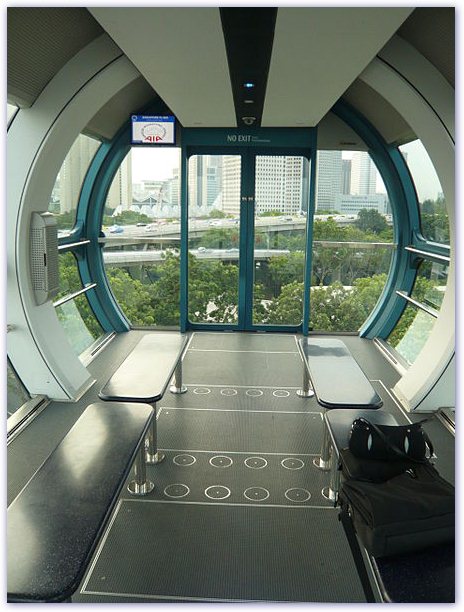
The Singapore Flyer is a giant Ferris wheel located in Singapore, constructed in 2005–2008. Described by its operators as an observation wheel, it reaches 42 stories high, with a total height of 165 m (541 ft), making it the tallest Ferris wheel in the world, 5 m (16 ft) taller than the Star of Nanchang and 30 m (98 ft) taller than the London Eye.

Situated on the southeast tip of the Marina Centre reclaimed land, it comprises a 150 m (492 ft) diameter wheel, built over a three-story terminal building which houses shops, bars and restaurants, and offers broad views of the city centre and beyond to about 45 km (28 mi), including the Indonesian islands of Batam and Bintan, as well as Johor, Malaysia.

The final capsule was installed on 2 October 2007, the wheel started rotating on 11 February 2008 and it officially opened to the public on 1 March 2008. Tickets for rides on the first 3 nights were sold out for S$8,888 (US$6,271), an auspicious number in Chinese culture. The grand opening for the Flyer was held on 15 April 2008.
 

Each of the 28 air-conditioned capsules is capable of holding 28 passengers, and a complete rotation of the wheel takes approximately 37 minutes. Initially rotating in a counter-clockwise direction when viewed from Marina Centre, its direction was changed on 4 August 2008 under the advice of Feng shui masters.

Inside one of the capsules
Photo credit - Chensiyuan


Source(s):  wikipedia

Tuesday, September 6, 2011

0 WHO HAS THE MOST FACEBOOK FANS?


Facebook - of course!


Well, we know who have the least - we do!  But as for the most facebook fans, that honour goes to Facebook with a whopping  52,144,321 Fans and growing at an alarming rate of 49,767/day, 366,776/week and 2,076,689/ month as of September 06, 2011!

How can anyone come close to that or even compete?  Actually,
Texas Hold 'em Poker is a close 2nd with an astounding 49,758,136 Fans!

As a matter of fact, 4 out of the top 5 of the organizations with the most Fans are in the United States with with the island of Barbados breaking the pattern thanks to it's famous singer - Rihanna.


Resource(s):

0 CAN YOU OPEN THE EMERGENCY DOOR OR ANY DOOR OF AN AIRPLANE DURING MID-FLIGHT?


No.  It's highly unlikely.

Sure we've heard many stories of people trying to open plane doors during flight - but no one has really ever succeeded - only in the movies!

One cannot open the door of a modern, pressurized commercial jet in midair..

The reason: doors won’t open in mid-flight due to pressure, and because of the way plane doors are constructed.

The aircraft doors in question are “plug type” doors, meaning “When closed, [these doors] are larger than the openings. You can push on a cabin door all you want, but it’s not going to go through the smaller opening.”

So how does one ever get this door through the opening if it's too small? There is more than one door model, but generally there's a handle that is rotated. The operator must pull the door slightly inward, reposition and rotate it before it can pass through the smaller opening.

Also, once all the doors are shut and the plane is starting to taxi down the runway - the cabin will start to pressurize.

Pressurization exerts a very strong force against the inside of the plane, sealing the doors shut and preventing them from being opened in flight. You can twist the handle and tug on it all you want, but it's impossible for a human, or even several humans, to overcome this pressure. Still, it's not recommended that you play with the door handle at any time as unauthorized tampering with aircraft equipment may result in arrest..

Some aircraft models have doors which slide upward on the inside of the aircraft, but the premise is the same: When the door is closed, it's larger than the opening, and cabin pressure prevents it from being opened in flight regardless of whether the handle is manipulated.

There was an incident of a door being unlatched in 1989, of the lower cargo door on a United Airlines passenger jet at about 23,000 feet which caused a sudden and explosive loss of pressure which in turn torn open a portion of the cabin— sucking out nine passengers through the large hole, along with their seats and the floor around them.  However, not because of someone trying to open the door but rather due to malfunctioning in the door’s electrical locking mechanism.
Modern doors today have been better re-designed to prevent this from happening. 


Source(s):  farecompare.com, usatoday.com

Sunday, August 14, 2011

0 HOW DO YOU ESCAPE FROM A SINKING CAR?

Here's a great article from wikiHow I discovered, explaining step-by-step, what to do - complete with video!


How to Escape from a Sinking Car

from wikiHow

Any car accident is frightening, but an accident in which your vehicle is thrown into the water, with you trapped inside, is absolutely terrifying. Such accidents are particularly dangerous due to the risk of drowning and in Canada alone, 10 percent of drowning deaths can be attributed to being submerged in a car, and about 400 North Americans dying from being submerged in a car every year.  However, most deaths are a result of panic, not having a plan and not understanding what is happening to the car in the water. By adopting a brace position to survive the impact, acting decisively when the car ends up in the water, and getting out fast, being trapped in a sinking vehicle is survivable, even if it's a flooded river.


Steps

  1. Brace yourself for impact. As soon as you're aware that you're going off the road and into a body of water, adopt a brace position. This is done by placing both hands on the steering wheel in the "ten and two" positions. The impact your car makes could set off the airbag system in your vehicle and any other brace position could cause serious injury in such an event. Remember, an airbag inflates rapidly, within 0.04 seconds upon being triggered. Once this aspect is out of the way, prepare for the next step immediately.
    • Remain calm. Panic reduces energy, uses up precious air, and causes you to blank out. Repeat a mantra of what to do to get out (see next step) and stay focused on the situation at hand. Panic can be left for the shore when you reach it.
  2. Undo your seat belt. Professor Dr Gordon Giesbrecht, who specializes in cold water immersion, says that the seatbelt is the first thing to attend to, yet it often gets forgotten in the panic. His motto is: Seat belt; children; window; OUT (S-C-W-O).
    • Unbuckle the children, starting with the oldest first (who can then help the others).
    • Forget the cell phone call. Your car isn't going to wait for you to make the call and sadly, people have lost their lives trying this.  Get busy getting out.
    • There is a counter-theory that suggests the seat belt should be left on. This theory suggests that if you release your seat belt, you may, due to underwater disorientation, end up moving away from the window or door opening due to the ingress of water through the opening. If you need to push the door open, being anchored by the seat belt might give you additional leverage, versus pushing the door while you're suspended in the water. Having your seat belt on could also help you maintain your sense of orientation if the car flips upside-down. On the downside, having your seat belt on can also make it harder to get out quickly and to move out, which is the point of reacting quickly from the start and not waiting in the vehicle. In the video featuring Rick Mercer and Professor Gisbrecht below, they show clearly that it's important to be able to move around from the start, including if you need to move to the backseat to get out of the car as the engine-heavy front part starts tipping deeper first.
  3. Open the window as soon as you hit the water. Following Professor Giesler's recommendation, leave the door alone at this stage and concentrate on the window. A car's electrical system should work for up to three minutes in water (not that you have three minutes of course), so try the method of opening it electronically first. Many people don't think about the window as an escape option either because of panic, lack of using the window for exit normally, or because they're focused on lots of misinformation about doors and sinking.
    • There are several reasons for not bothering with the door according to Professor Giesler. Immediately upon impact, you have only a few seconds in which opening the door of your sinking car is possible, while most of the door is still above water level. Once the car has started to sink, it is not humanly possible to open the door again until the pressure between the inside and the outside of the car has been equalized (leveled); this means that the car cabin has to be filled with water and that's not really a state you want to be in. Moreover, Professor Giesler says that by opening the door, you invite a quick sink in place of the floating time available to get out. In his experiments with 30 vehicles, he found that all vehicles float, anywhere between 30 seconds to 2 minutes. You could be using this float time to escape rather than opening the driver's side door and giving the water 5 to 10 seconds to sink the car and drown everyone in the backseat.
    • There are numerous theories that advocate staying in the car calmly until it hits the bottom, fills with water, and you open the door and swim up. Mythbusters termed this the "maximum conservation of energy" approach and it looks viable when you watch it. The trouble with this theory (tested only in a swimming pool of known depth with a rescue crew on full standby) is that most times you won't know the depth of the water into which your car has plummeted, so waiting this long will usually prove fatal. This method worked just over 30 percent of the time in Professor Giesbrecht's study, while his S-C-W-O approach worked over 50 percent of the time.
    • The end of the car that contains the engine will usually sink fastest, often leaving the car at an angle where the heaviest part of the vehicle is lower than the lightest. As such, you may be able to open some doors while the car is still floating.
  4. Break the window. If you aren't able to open the window, or it only opens halfway, you'll need to break it. You will need to use an object or your foot to break the window.  It may feel counter-intuitive to let water into the car, but the sooner it is open, the sooner you will be able to escape directly through the broken window.
    • If you have no tools or heavy objects to break the window with, use your feet. If you have high heels, these might work when placed at the center of the window. Otherwise, Professor Giesbrecht advises that you aim to kick near the front of the window or along the hinges (see the demonstration in the second video below). Be aware that it's very hard to break a window by kicking, so find these breakpoints. Don't even try the windshield; it's made to be unbreakable (safety glass) and even if you did manage to shatter it (unlikely in the time you have), the stickiness of safety glass can make it hard to get through. Side and rear windows are the best options for escape.
    • If you have a heavy object, aim for the center of the window. A rock, hammer, steering wheel lock, umbrella, screwdriver, laptop, large camera, etc., might all serve as suitable battering objects. Even the keys might work if you're strong enough.
    • If you've already thought ahead, you might have a window breaking tool handy in the car. There are various tools available. Professor Giesbrecht recommends a "center punch", which is a small tool that could be easily stowed in the driver's side door or on the dashboard, for fast retrieval. This power punch is usually spring-loaded and can also be found in a hammer shape. Failing that, you could also carry your own small hammer.
  5. Escape through the broken window. Take a deep breath, and swim out through the broken window as soon as you've broken it. Water will be gushing into the car at this point, so expect this and use your strength to swim out and up. Professor Giesbrecht's experiments have shown that it is possible to get out through this torrent (contrary to some theories) and that it's better to go now than to wait.
    • Look to children first. Heave them up toward the surface as best you can. If they cannot swim, see if you can give them something that floats to hold onto, with strict instructions not to let go. An adult may need to go with them immediately if there is nothing to hold onto.
    • As you exit the car, do not kick your feet until clear of the car - you could injure other passengers. Use your arms to propel you upward.
    • If the car is sinking quickly and you haven't gotten out yet, keep trying to get out of the window. If there is a child in the car, tell him or her to breathe normally until the water is up to their chest.
  6. Escape when the car has equalized. If it has reached the dramatic stage where the car cabin has filled with water and it has equalized, you must move quickly and effectively to ensure your survival. It takes 60 to 120 seconds (1 to 2 minutes) for a car to fill up with water usually. While there is still air in the car, take slow, deep breaths and focus on what you're doing. Unlock your door, either with the power button (if it is still working) or manually. If the doors are stuck (which they probably will be in most cases, with the pressure being massive), hopefully you've been busy breaking the window already, as advised in the previous steps.
    • Continue to breathe normally until the water is at chest level, then take a deep breath and hold your nose.
    • Stay calm. Keep your mouth closed to preserve breath and to prevent water from entering. Swim out through the broken window.
    • If exiting via an open door, place your hand on the door latch. If you are unable to see it, use a physical reference by stretching your hand from your hip and feeling along the door until you locate the latch.
  7. Swim to the surface as quickly as possible. Push off the car and swim to the surface. If you don’t know which way to swim, look for light and swim toward it or follow any bubbles you see as they will be going up. Be aware of your surroundings as you swim and surface; you may have to deal with a strong current or obstacles such as rocks, concrete bridge supports, or even passing boats. If it's ice covered water, you'll need to head for the obvious hole created by the car's impact. Do your best to avoid injuring yourself on obstacles, and use branches, supports, and other items to cling to if you're injured or exhausted.
  8. Seek medical attention as soon as possible. The adrenaline in your bloodstream after the escape may make you unable to detect any injuries you may have sustained in the accident. Hail passing motorists who can call for help on their phones and provide you with warmth, comfort, and a lift to nearest hospital.
    • Hypothermia may be a real possibility, depending on the water temperature, level of shock passengers and drivers are experiencing, and external temperature.

Video

This video shows Dr Giesbrecht's experiments, along with Rick Mercer.


Tips

  • If you ride regularly with people and drive by water, discuss what to do if the car goes into the water. Anticipation and planning are critical to surviving life threatening emergencies like this one. Teach all family members including children the S-C-W-O method:
    • Remove seatbelt
    • Free children
    • Open window
    • Get out.
  • Keep the tools for escaping within the vehicle at all times. The emergency window breaking devices are available from safety stores.
  • Your clothing and heavy objects in your pockets can make you sink. Be mentally prepared to kick off your shoes and remove heavy outer clothing such as jackets if necessary. The less clothing you have on the easier swimming will be. Even your jeans or pants will weigh you down significantly.
  • It can be difficult to direct other people in this situation. Be prepared and discuss the possibility before it happens. Focus on children first; adults will need to fend for themselves until the children have been helped, so don't be distracted.
  • Don't bother turning your lights off. Turn them on if you are unable to escape or if the water is cloudy. The light's electronics are usually waterproofed, and the lights themselves will help rescuers find your vehicle.
  • Under certain circumstances pressure may not equalize until the entire cabin is flooded. In this situation, either fight the current or wait until the car is fully submerged before making your escape.

Warnings

  • Don't take anything heavy or unnecessary with you as you escape, and remember that everything is unnecessary in this situation except your life and the lives of those around you.
  • Under most circumstances you should not wait for help. Rescuers will most likely not be able to reach or locate you in time to provide support.

Things You'll Need

  • Keep a center punch handy in the car or hanging off your keyring.

Article provided by wikiHow, the original wikiHow article on How to Escape from a Sinking Car. All content on wikiHow can be shared under a Creative Commons license.

Tuesday, August 9, 2011

0 IS IT POSSIBLE TO OPEN THE DOOR OF A SINKING CAR?


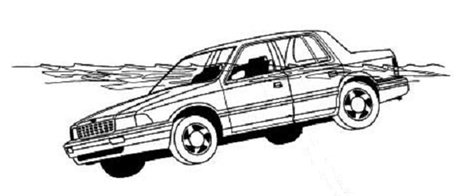
According to the American Automobile Association, an estimated 11,000 vehicles crashed into bodies of water in one year. The MythBusters tested various methods of escaping a sinking car, in this case using a Ford Taurus.

This terrifying scenario can be life-threatening, as the water pressure exerted against a sinking auto makes it extremely difficult to open a door and swim to safety.

MythBusters Jamie Hyneman and Adam Savage took the plunge to verify the scientific logic that until a car completely fills with water and equalizes the pressure inside and outside it, it's physically impossible to open that escape hatch.

To replicate the submerged-car scenario, Jamie and Adam hopped into an old sedan and were gently dropped into a 13-foot-deep swimming pool. Adam's job was to try to open the driver's side door, while Jamie — outfitted with a rebreather — perched comfortably in the backseat and monitored the vehicle's air supply. As suspected, the water pressure differential between the inside and outside of the cabin was simply too great for Adam to pry open the driver's side door.

But once the sinking sedan had filled to the brim, the pressure difference stabilized, allowing the door latch to release. Although Adam eventually was able to get out, he had to resort to a backup air supply before he made a break.

The final analysis: A sinking car is indeed a tough nut to crack.  If a car falls into the water and becomes submerged, the door cannot be opened until the interior is flooded.
The pressure differential between outside and inside when the car is submerged is too great for a man to force the door, and the pressure must first be equalized, which means the interior must be flooded first. Adam was forced to resort to emergency air in his first test, since he expended a great deal of energy (and oxygen) in attempting to open the door. A second test later showed it to be possible to escape the car simply by opening the door, but only by remaining calm and not attempting to open the door until the interior is well and truly flooded, so as to conserve oxygen while holding one's breath.


Having confirmed the myth, Adam and Jamie expanded on the myth to determine in what situations and which methods of escaping the car are feasible.
A person can escape a car that has fallen into the water...


...immediately after hitting the water.  Confirmed. There is not enough water pressing on the door to keep it shut. Adam escapes easily.


...as soon as the water inside the car is up to one's waist.  Confirmed. Adam barely manages to force the door open and is even briefly submerged before he emerges from the car.


...as soon as water covers the car window from the outside.  Busted.
 At this point, the pressure difference has become too great. Adam is unable to escape.


They also proved that breaking the window is a viable way to escape a sinking car, if one has a suitable tool. Though breaking the window quickly floods the interior, Adam only has to hold his breath for a few seconds before climbing through the simulated "broken window" and surfacing. A person can open a window in a submerged car by...


...using a manual window crank.  Busted.
Using a test weight of 350 pounds (160 kg) (equivalent to pressure differential from just two feet of immersion), the pressure of the window glass against the frame is so great that no amount of effort can move the gear. It is more likely that the window handle will be broken.


...opening power windows.  Busted.
Though more powerful, power windows still cannot overcome the pressure differential.
 Contrary to popular belief, though, power windows can withstand immersion in fresh water for prolonged periods and still function. The electricity does not short out immediately.


...attempting to break the window using a set of keys.  Busted.
Window glass is tempered and resistant to impact from blunt objects. Keys are ineffective.


...attempting to break the window using a cell phone.  Busted.
A cell phone is ineffective.


...attempting to break the window using steel-toed boots.  Busted.
Boots are ineffective.


...attempting to break the window using a window-breaking hammer.  Confirmed.
The device is designed with a pointed tip designed to shatter tempered glass. The hammer broke the window on the first try.


...attempting to break the window using a spring-loaded center punch.  Confirmed.
The point of the punch can work like the tip of the hammer, and punches are sold for the purpose of breaking window glass (see below). The punch broke the window on the first try.


See also: